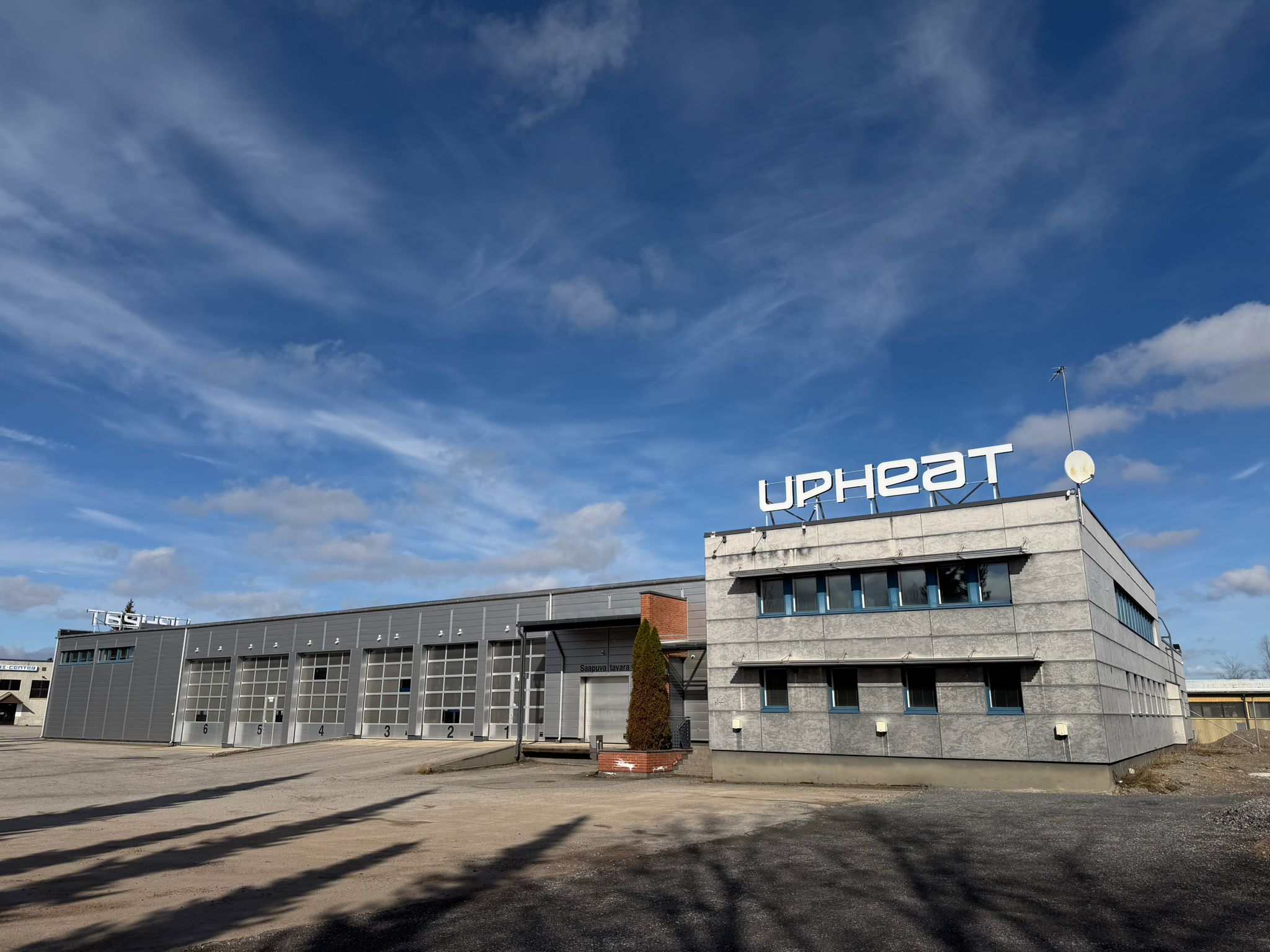
Upheat has been selected as one of 25 companies in this year’s Nordic Cleantech Open, run by Cleantech Scandinavia. The competition received over 130 applications from early-stage cleantech companies across the Nordic and Baltic regions. The Top 25 were chosen by an international jury of venture capital investors and industrial experts from companies including BASF, Evonik, E.ON, Metsä, Stora Enso, Fortum, and Dow Chemicals, evaluating business model, problem-solving ability, and environmental impact. As part of the selection, Upheat will attend the Nordic Camp, where selected companies meet investors and industrial partners.
A technology built around a specific bottleneck
The Tampere-based company develops oil-free high-temperature heat pumps designed to decarbonize process steam above 100°C. The core problem they are solving is a technical one: in conventional industrial heat pumps, oil lubrication becomes a significant limiting factor at temperatures above 100°C, causing efficiency loss, maintenance needs, and refrigerant degradation – making them financially less feasible for high temperatures.
Upheat removes oil from the system entirely. The heat pump uses high-speed turbo compression with a rotor levitating on active magnetic bearings, meaning the rotor has no mechanical contact with any surface. The result is a system with no friction losses, clean heat exchanger surfaces, and practically no maintenance requirements. The heat pumps deliver between three and seven times more heat energy than the electrical energy consumed, and use natural refrigerants designed to meet upcoming FGAS and PFAS regulations.
Addressing one of the largest unsolved emissions problems
Industrial heating accounts for 46 percent of global energy consumption, with 83 percent of that still generated by burning fossil fuels. Heating alone is responsible for more than 20 percent of total global CO2 emissions. While many industries have made net-zero commitments, cost-effective solutions for high-temperature process heat have remained scarce and progress is in many cases slowing down.
Upheat’s heat pumps connect directly to existing infrastructure, recovering waste heat and returning it as usable process steamt with a payback period of typically one to three years. The company targets energy-intensive sectors including food and beverage, pulp and paper, chemicals, and pharmaceuticals. The company is now entering a significant milestone: testing of the first product has started, with first customer deliveries planned for later this year.
”Getting this recognition means a lot to the team – we have put serious engineering work into solving a problem that others have considered too difficult.” — Timo Pulkki, CEO, Upheat